
Indigenous and University Scientists Advance Protocols for eDNA Wildlife Monitoring
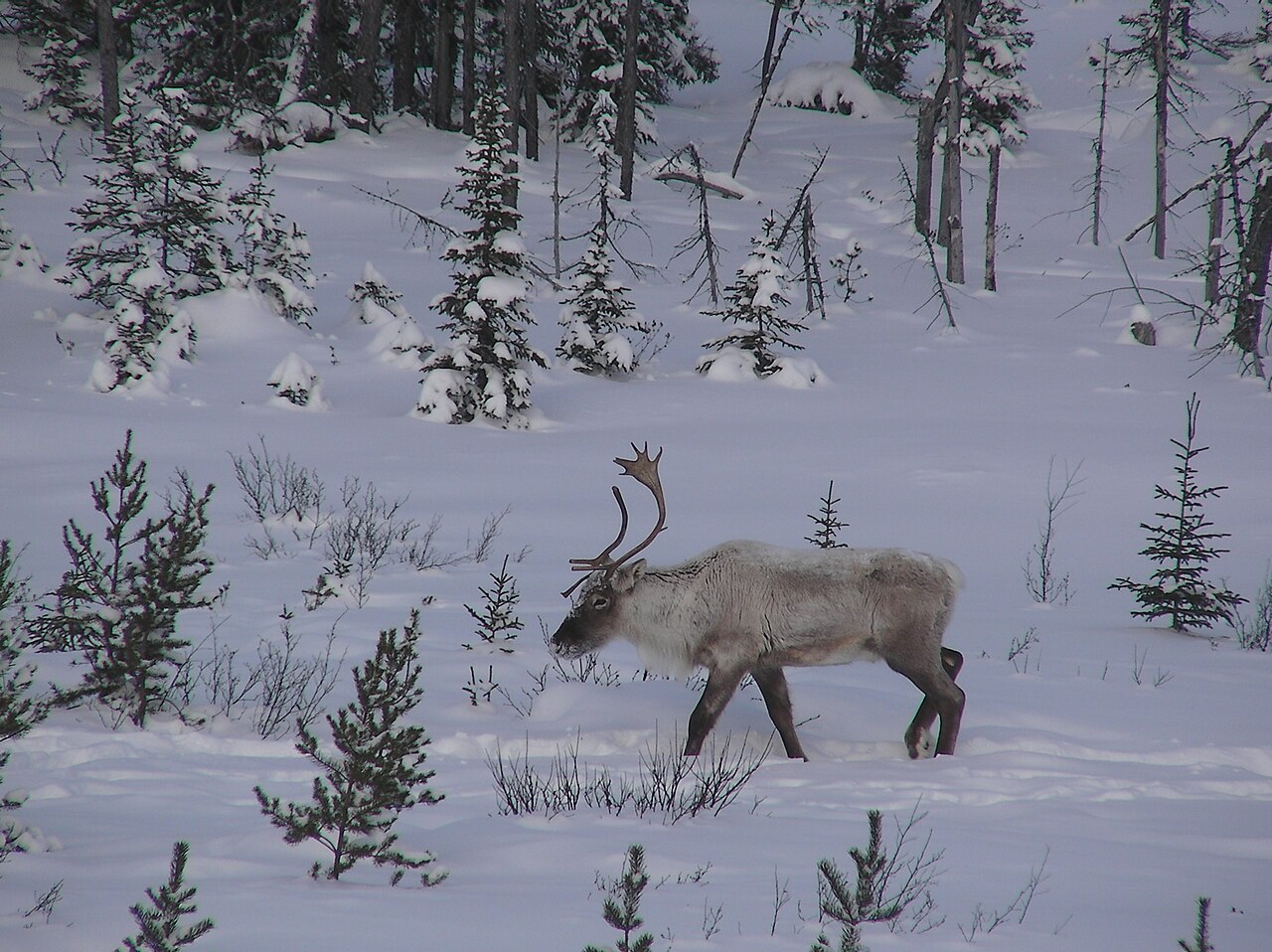
Featured image caption: A caribou walks in snow in Quebec, Canada. Photo credit: peupleloup, CC BY-SA 2.0 <https://creativecommons.org/licenses/by-sa/2.0>, via Wikimedia Commons
Source Article: Bélisle, A. C., Croteau, B., To, T. A., Couillard, J., Polson, G., & Langlois, V. S. (2026). Tracking terrestrial wildlife with environmental DNA: Methods designed by and for Indigenous organizations. Journal of Applied Ecology, 63, e70253. https://doi-org.ezproxy2.library.colostate.edu/10.1111/1365-2664.70253
Secondary sources:
Indigenous biodiversity stewardship: O’Bryan, C.J., Garnett, S.T., Fa, J.E., Leiper, I., Rehbein, J.A., Fernández-Llamazares, Á., Jackson, M.V., Jonas, H.D., Brondizio, E.S., Burgess, N.D., Robinson, C.J., Zander, K.K., Molnár, Z., Venter, O. and Watson, J.E.M. (2021), The importance of Indigenous Peoples’ lands for the conservation of terrestrial mammals. Conservation Biology, 35: 1002-1008. https://doi.org/10.1111/cobi.13620
Environmental DNA primer: Davis, J. Environmental DNA: What is it and how can it help nature recovery? The Natural History Museum at Tring. https://www.nhm.ac.uk/discover/what-is-environmental-dna-edna.html
‘Local Knowledge… New Technologies’
In an era of technological progress and collaborative conservation, Indigenous and university researchers worked together to find accessible and effective methods for tribes and other organizations monitoring local wildlife.
Globally, Indigenous peoples are leaders in conservation, protecting swaths of biodiversity worldwide and using traditional and local knowledges to steward ancestral lands.
For Indigenous land guardians who are interested in monitoring species with cultural significance, one emerging method is environmental DNA (eDNA), a noninvasive process that detects the presence of different species through sampling the environment, such as the soil, water or air.
While authors report eDNA is “increasingly reliable and cost effective,” it remains new and unrefined as a survey tool for wildlife across social and environmental systems.
To address this knowledge gap, university and First Nations scientists cocreated a research project to develop and test protocols for different eDNA-based wildlife detection methods – ensuring other Indigenous organizations can replicate the methods for their own projects.
Methods on the Ground (and in the Air)
The study took place within the Abitibiwinni First Nation community in Quebec, Canada, on the tribal nation’s ancestral lands. Study authors co-designed all aspects of the project, and tribal members collected and prepared field samples for analysis by university partners.
The group tested four methodologies or substrates for detecting eDNA: Invertebrates caught in fly traps; Downstream water detection; Local water detection using water filtration or passive sampling; and Snow. Additionally, researchers set up aerial (or Dust) sampling stations next to invertebrate stations to evaluate the difference between eDNA transported by insects from passive airborne eDNA.
The team tested for eDNA detection of three ungulate species that are culturally and ecologically significant to the Anishnaabeg people: moose, white-tailed deer and caribou, or MOS, 848ACKeCi, and ATiK respectively in the Anishnaabeg language. Existing sites with captive ungulates served as treatment stations, with positive control stations (where wild ungulates were locally present) and negative control stations (without wild ungulates) for each hypothesis.
Making Science Accessible
For each method as well as for the process of filtering water samples, researchers developed publicly available protocols for replicating their process. All methods had to be not only accurate, but also accessible and applicable by Indigenous organizations and land guardians in remote areas.
As a result, researchers intentionally designed sample collection devices using inexpensive materials available at the local hardware store, including plastic buckets, commercial water bottles and homemade pumps, to ensure any organization could adapt the protocols for their own site and situation.
During sampling in 2023 and 2024, researchers collected replicate samples at each station for each method upon every site visit. The team then evaluated the detection rates at both the sample and station levels to test their hypotheses.
Detecting the Best Methods
Overall, the team found the snow sampling method most often detected ungulate eDNA with a 100% success rate, although they identified a risk of false positives. Dust and invertebrate sampling had the next highest detection probabilities.

Figure: Bélisle et al. 2026, via Journal of Applied Ecology.
All three methods can perform best under certain environmental conditions, the authors write. The ideal substrate and methodology for monitoring will vary based on the species, environment, and equipment available.
The authors did not recommend water sampling without validation, as it provided inconsistent results.
By experimentally comparing sampling methods, this study enhanced the scientific community’s understanding of eDNA monitoring. In addition, the rigorously designed, accessible protocols can help both non-Indigenous and Indigenous organizations adapt and design eDNA monitoring projects for wildlife. Future studies could explore how well the protocols work for other species and where species density is lower.
Finally, more methods for collecting and testing eDNA are yet to be discovered. These protocols provide the groundwork for future scientists to standardize and validate new approaches, improving wildlife monitoring and conservation outcomes across social and ecological contexts.
Reviewed by:


