
Do Festive Fireworks Increase Risk of Injury? A Study on Seasonal Trauma Cases
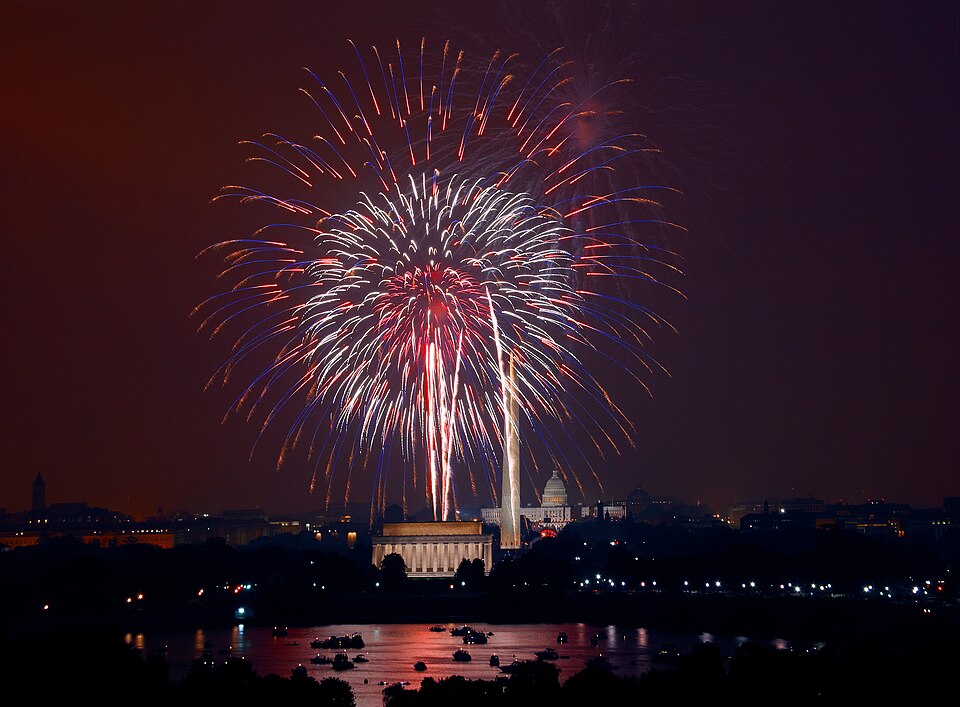
For the United States, July the 4th marks 250 years since the signing of the Declaration of Independence in 1776. Although this study does not directly discuss this holiday, this paper along with existing research finds that personal firework use during major holidays increases risk of firework injury. Image Source: Carol M. Highsmith, Public domain, via Wikimedia Commons
Primary Source Article:
Ammo, T., Fiedler, A., Reinkemeier, F., Huyghebaert, T. A., Wolff, A., Drysch, M., Schmidt, S. V., Steubing, Y., Lehnhardt, M., Freund, G., Wachenfeld-Teschner, V., Dos Santos Adrego, F., Mailänder, P., Boos, A. M., Stang, F., Wallner, C., & Fueth, M. (2026). Impact of firework restrictions on emergency plastic surgery cases: A five-year comparison of restricted vs. non-restricted New Year’s Days and Easter Sunday (2021–2025). Journal of Plastic, Reconstructive & Aesthetic Surgery, 118, 437. https://doi.org/10.1016/j.bjps.2026.05.043
Secondary Source Articles
Brimblecombe, P. (2026). Environmental Impact of Fireworks. Environments, 13(6), 355. https://doi.org/10.3390/environments13060355
Puri, V., Mahendru, S., Rana, R., & Deshpande, M. (2009). Firework injuries: a ten-year study. Journal of Plastic, Reconstructive & Aesthetic Surgery, 62(9), 1103–1111. https://doi.org/10.1016/j.bjps.2007.12.080
Wegmann, H., Mayer, S., Blankenburg, N., Zimmermann, P., Schulz, T., Lacher, M., Kleber, C., & Osterhoff, G. (2025). Firework injuries around New Year’s Eve – epidemiology, injury patterns and risk factors. European journal of trauma and emergency surgery : official publication of the European Trauma Society, 51(1), 106. https://doi.org/10.1007/s00068-025-02785-y

Who can resist the fun of fireworks? Whether it’s sparklers, Roman candles, or big fireworks, there is something special about a splash of color against a night sky during festivals and holidays.
However, despite fireworks being an important part of global celebration, there are other impacts to consider such as the wellbeing of our environment and the public.
In a recent study, researchers in Germany wanted to study traumatic injuries that required plastic surgery and the patterns associated with seasonal and event-related holidays: New Year’s Day (NYD) and Easter Sunday. They compiled health records spanning 5 years, to compare the injuries and trends during the two events at two University Hospitals in Germany.
Researchers hypothesized that NYD would have a higher volume of young male patients from firework use, leading to high health care resource burdens and costs.
The result was a near twofold increase of traumatic injuries on NYD compared to Easter holiday.
Although the findings are what any lay person can intuitively guess, the research conducted was still important. It adds to existing literature on the volume and intensity of firework injuries and serves as a cautionary guide for health prevention strategies and care planning for holiday periods.
Looking for Data to Contrast with New Year’s Day
There were two important time frames that served as a means of determining the influence of fireworks on emergency trauma cases.
Easter Sunday was a control used to compare injury patterns with NYD. Without these two dates, researchers examined would have a difficult time comparing the impact of culturally related use of fireworks during unrestricted holidays that permit firework use.
Meanwhile, COVID-19 was an opportunity to examine how policy intervention influenced incidents of trauma cases for both holidays.
What were the Trends for 2021-2025?


In total, 155 patients arrived at the emergency departments of two plastic surgery centers on New Year’s Day. On Easter Sunday there were only 80 cases, barely half the incident count.
During COVID restrictions, 11 people were treated on New Year’s Day and 13 people were treated on Easter. After restrictions were lifted, NYD injury cases rose again from 29 to as high as 42. The Easter holiday peaked in 2022 and then declined in 2025 to baseline levels.
The study also determined that the median cost of patient stays for NYD and Easter Sunday were €3663 and €2949, respectively. For acute hospital injuries, costs for NYD injuries amounted to approximately €854,584, compared to €70,085 for Easter Sunday.
The study cites that the most common injuries from fireworks are a combination of burns, lacerations, and open fractures or amputations of fingers. Some of these injuries cause permanent impairments. In worse case scenarios, illegal use of high grade explosives resulted in multiple injuries: burns, inhalation injury, and multiple amputations.
For both university hospitals, men averaged 8-9 years younger than patients on Easter. The two holidays also had a distinct pattern of injuries. During NYD, burn injuries of the hands, face, and near the eyes were most common. This also matches existing literature of other cases globally during major festival events that permit personal use of fireworks. Easter Sunday profile patient cases had broad cases of injuries that didn’t point to any injury patterns.
In fact, researchers also mentioned in another study an estimated “50 to 60 severe hand injuries are treated in a single Silvester night at one large urban hospital,” mostly in young men.
Regulations and Public Policies can Prevent Rise of Holiday Related Firework Injury

The implementation of COVID restriction of celebrations drastically decreased the incidence of firework injury that would have normally been present on NYD. According to the study, this is a telling sign that the injuries are preventable and that prevention policies are recommended to keep incidence rates low.
What could these policies look like? It depends. This could look like an outright ban, a combination of education outreach and legislative changes, national surveillance, and fireworks designed to be operated with a device rather than traditional methods. The challenge is that fireworks are popular and regional attitudes differ on how to regulate the distribution and sale of fireworks. For example, in states such as Oregon, Wyoming, and Texas, there are several fireworks stands by the roadside. In contrast, Massachusetts bans the sale, use, and possession of fireworks for private citizens. The Netherlands is also expected to ban most firework uses by New Year’s 2027. India still permits fireworks, but limits the type and noise level. It is important to note that regions that choose public education alone have limited benefits to the public.
Fireworks are a time of celebration, not tragedy. The cautionary tale is that safety is still important even during relaxation on holidays. Beyond New Year’s, cases of severe injury have been documented during the Festival of Lights in India, Persian Wednesday Eve, and China’s Spring Festival.
The United States Independence Day is no exception to the need for the caution and safe firework practices. Perhaps with the growing data illustrating these trends, more aggressive educational campaigns and legislative policies can be developed. After all, everyone deserves to enjoy their holiday uninjured.
Reviewed by:




.jpg)