Flower Power: From Nanoparticles to Anticancer, the Indian Golden Daisy that Can
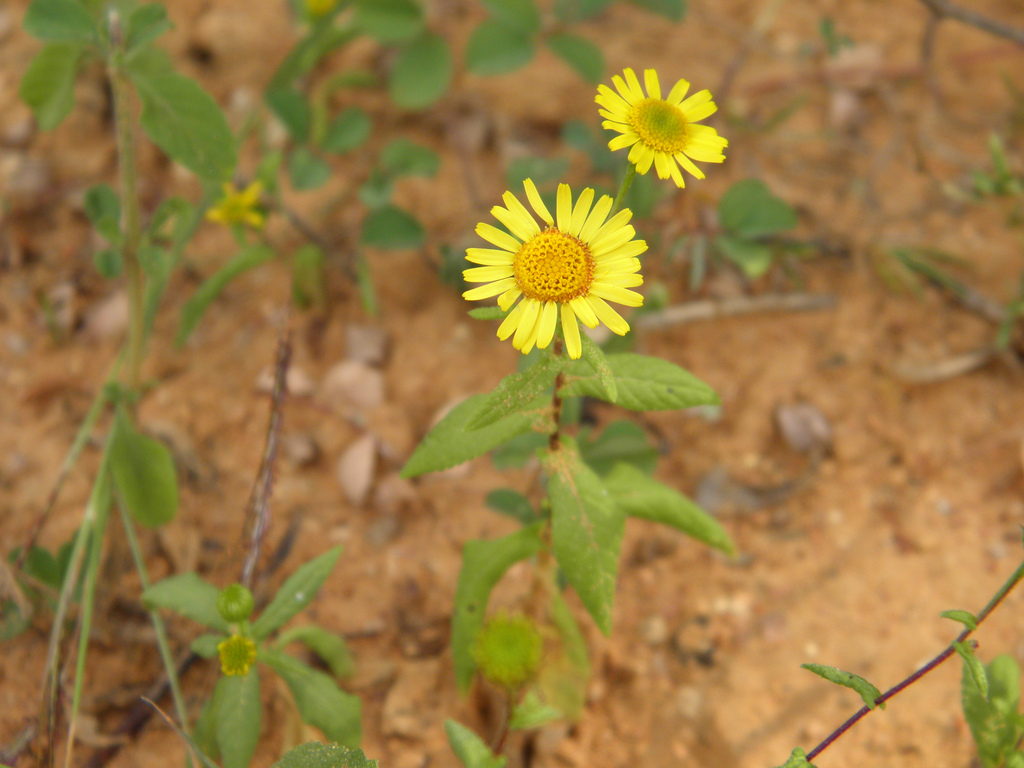
Featured Image Caption: Although this plant can be considered a common weed in fields, it is also a medicinal plant used in India, China, and Thailand. Vicoa indica by Lalithamba by SA CC by 2.0 via Wikimedia Commons
Primary Source Article
Shanmugarathinam, A., & Elamaran, R. (2025). Sustainable synthesis of zinc oxide nanoparticles from Vicoa indica leaf extract: Characterization and evaluation of antibacterial, antioxidant, and anticancer properties. Journal of Nanostructure in Chemistry. https://doi.org/10.1007/s44174-025-00373-7
Secondary Source Article(s)
Krishnan, S. G., Venkateshan, N., Subiksha, T., Sundaramoorthi, R., & Sharon, J. V. (2025). A Systematic Review on the Medicinal Importance and Bioactive Molecules of Indian Medicinal Plant Vicoa indica. Journal of Applied and Advanced Field Research (JAAFR).
Dhall, K., & Dogra, M. (1988). Phase I and II clinical trials with Vicoa Indica (Banjauri), a herbal medicine, as an antifertility agent. Journal of Ethnopharmacology, 23(2), 339–339. https://doi.org/10.1016/0378-8741(88)90027-X
Thangavel, L., & Gopinath, S. C. B. (2021). Introduction to nanoparticles and analytical devices. In S. C. B. Gopinath & F. Gang (Eds.), Nanoparticles in analytical and medical devices (pp. 1–29). Elsevier. https://doi.org/10.1016/B978-0-12-821163-2.00001-7
Fernández-Bertólez, N., Alba-González, A., Touzani, A., Ramos-Pan, L., Méndez, J., Reis, A. T., Quelle-Regaldie, A., Sánchez, L., Folgueira, M., Laffon, B., & Valdiglesias, V. (2024). Toxicity of zinc oxide nanoparticles: Cellular and behavioural effects. Chemosphere (Oxford), 363, Article 142993. https://doi.org/10.1016/j.chemosphere.2024.142993
The Indian Golden Daisy (Vicoa Indica) is traditionally used in Indian ethnomedicine for treating inflammatory disorders, skin ailments, wounds, fever, and digestive problems. (Krishnan et. al 2025). Although there has been a long history of practice in ethnobotany, it has been poorly understood and validated in modern medicine. However, there has been a shift in recent decades on examining the properties of plants that have long been considered medicinal in communities.
Vicoa Indica is one such promising flower that was investigated for the production of zinc oxide particles, antibacterial, antioxidant, and anticancer properties. In this study, researchers were able to establish that the bioactive chemicals in Vicoa Indica were able to form zinc oxide nanoparticles and have anticancer, and antimicrobial properties.
Why are Zinc Oxide Nanoparticles Important?

Zinc Oxide Nanoparticles (ZnONPs) are inorganic particles used in many applications, including food preservatives, composite dental materials, sunscreens, toothpastes, ceramics, biosensors, and cosmetics. ZnONPs have already been established as being able to infiltrate biofilms and can be used as an aid in drug delivery.
Although the benefits of the usage of ZnOPs are numerous, the procedure for manufacturing ZnOPs is expensive and the byproducts can be unsafe for people and the environment. In one example, employees exposed to zinc-containing fumes from the production of ZnOPs experienced health problems. Employees exposed to zinc fumes may suffer from metal fume fever. This condition includes symptoms such as dyspnea, flu-like symptoms, and inflammation of airways. Researchers are interested in green technology approaches for safe and effective ways to synthesize ZnOPs.
Behold, the Indian Golden Daisy, the Versatile Plant
Contrary to the common name, the Indian Golden Daisy is a plant that does not belong to the daisy family. This plant is found in West tropical Africa, India, Pakistan, Myanmar, China, Sri Lanka, and Thailand. It is a branched annual herb 3ft tall with oblong-spear like leaves and bright yellow flowers that are 1-2cm in diameter. To the untrained eye, the flower could be mistaken for a weed. However, this annual herb has a long history of being used as birth control and as an anti-inflammatory by ancient people.
Within the last few decades, science has caught up with what people practicing ethnobotany have long understood – the Indian Golden Daisy is a medicinal plant with useful properties.
In an article published last year, Vico indica was characterized for its biological applications such as antibacterial properties, antioxidants, and anticancer properties. Other scholarly research articles have confirmed that the plant has antiviral and contraceptive properties. However, what makes this research different is that the leaf extract of Vico indica was used to determine if zinc oxide nanoparticles could form.
Recipe for Success: How a Leaf Extract is Converted to Zinc Oxide Nanoparticles
After collecting, grinding, and preparing the plant extract of V. Indica, the real work begins. The leaf powder was mixed with a solution of zinc acetate. After a series of heating, washing,extracting impurities, and drying, a refined pellet of ZnONPs was formed.
To prove that their product was ZnOPs, the substance went through a battery of tests to study and confirm the chemical and structural properties of ZnOPs and determine how pure and stable the sample was.
To better understand this process, pretend you are making something as simple as baking powder.
Aside from appearance and taste (do not recommend), how do you know you have achieved your desired product? Also, suppose you do make the product, how well was it made, and what quality is the ingredient?
To accomplish identification, quality, and better understand how plants form ZnOPs,t the researchers in this study used Ultraviolet-Visible (UV-Vis) Spectroscopy, Fourier Transform Infrared (FTIR) spectroscopy, and X-Ray Diffraction (XRD) analysis, Scanning Electron Microscopy with Energy Dispersive X-Ray Spectroscopy (EDAX), and Zeta Potential Analysis.
The collection of these tests establishes that the extract matched chemical patterns observed in other ZnONPs,behaved like ZnONPs, and looked like ZnONPs. In addition, scientists were able to better understand the active compounds that were responsible for the nanoparticle synthesis.
Looking at Phytochemicals for Anticancer, Antimicrobial, and Antioxidant Properties

Although researchers were primarily interested in whether the Indian Golden Daisy could form zinc nanoparticles, they were also interested in determining whether the plant had phytochemicals that had antimicrobial, anticancer, and antioxidant properties. Phytochemicals are chemical compounds that plants produce as a defense from virus, bacterial, fungi, and environmental stress.
Several tests were performed to identify what phytochemicals were in the extract. The plant had alkaloids, flavonoids, tannins, phenols, glycosides, saponins, and steroids. For the antibacterial activity test, the leaf extract was tested against the bacteria S. aureus and E. coli. The two types of bacteria were grown in petri dishes and then different concentrations of the ZnONPs made from the plant extract were placed on the dish to see if no bacteria would grow near the product.
For antioxidant activity, a common test (DPPH radical scavenging assay) was performed. Observing an intensity color change from deep violet to yellow confirmed that the plant has antioxidant capabilities. For studying anticancer properties, ZnONPs were added to human lung carcinoma cells grown on a petri dish (in vitro). In this test, ZnONPs also kept cancer cells from growing.
Overall, researchers were able to demonstrate that V. Indica can be used to produce ZnOPs, and these ZnOPs had antimicrobial and anticancer activity. This means good news from an environmental perspective and a collaboration perspective. The success of this study not only highlights the importance of investigating green approaches for the production of ZnOPs, but a bright future for collaborative work between researchers and ethnobotanists to develop safer chemical manufacturing processes.
Reviewed by :