Arthropod Allies in the Atacama Desert: How One Parasitic Plant Promotes its Own Success
Source Article: Guerra, P.C., Escobedo, V.M. & Gianoli, E. (2025) Mistletoes benefit from initiating cascading effects in a cactus–stem borers–arthropods system: A positive feedback. Ecological Entomology, 50(1), 17–23. Available from: https://doi.org/10.1111/een.13371
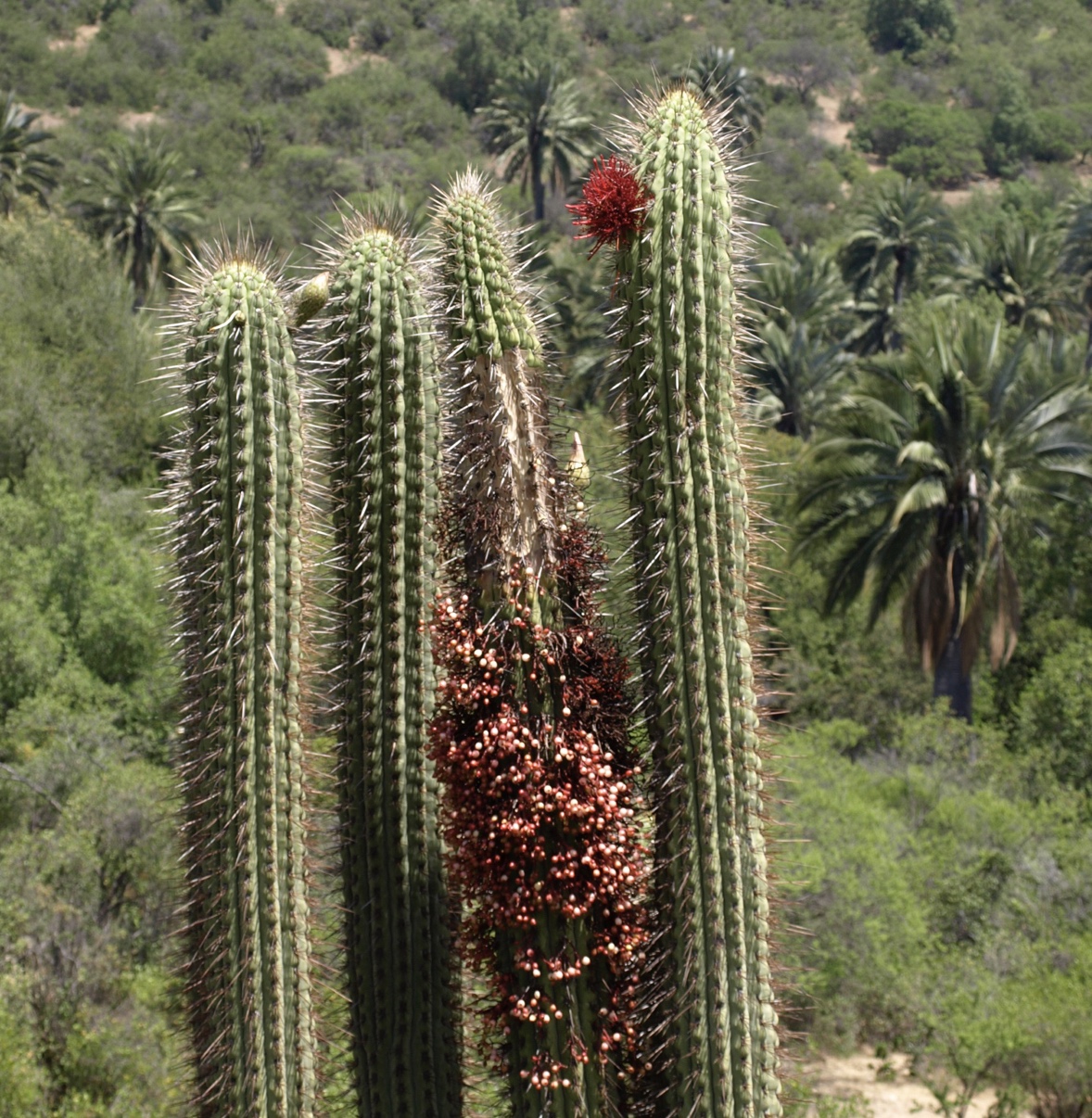
Featured Image Caption: Parasitic mistletoe sucks water and nutrients from cacti in the Atacama Desert. Image Source: Scott Zona via Flickr, CC BY-NC 2.0
Parasitic Plants Can Have Cascading Effects on Ecosystems
Parasitic plants are a bit like vampires; they suck the sap out of other plants. Parasitic plants take some or all of the water and nutrients that they need to survive directly from other plants by attaching to their roots or stems. Because of their unusual lifestyle, these plants’ impacts on their community of neighboring plants and animals can be complicated and surprising.
Parasitic plants have negative effects on their host plants, but these negative effects on host plant health can have consequences of their own. For example, mistletoes that parasitize pine trees can make the trees’ needles less nutritious for herbivores like beetles and caterpillars. As a result, parasitic mistletoe can lead to declines in the numbers of these herbivores.
Previous research findings like these led a team of researchers in Chile to ask an interesting question: Do parasitic plants benefit from the cascading effects they have on their communities of neighboring plants and animals?
Solving a Prickly Puzzle in the Desert
The researchers pursued an answer to this question by conducting an experiment in a community of parasitic mistletoe, cacti, beetles, and other arthropods in the Atacama Desert in Chile. In this ecosystem, parasitic mistletoe attaches to cacti, which are then weakened and more easily attacked by stem-borer beetles. The beetles carve brood chambers, or holes in the cactus where the beetles leave their eggs. They make more of these chambers in cacti that are parasitized than in cacti without mistletoe. Then, a mix of other arthropods including bees, spiders, and ants move into the brood chambers, which are more abundant in parasitized cacti.

Mistletoe parasitism increases the number of brood chambers in a cactus, but researchers wanted to assess how the related increase in arthropods helps or harms the mistletoe. First, they found 40 cacti which were being parasitized by mistletoe. They specifically chose cacti which were 25-35% covered by parasites. Then, using modeling clay, they closed up either 0%, 40%, or 80% of the brood chambers made by beetles in each cactus. This allowed them to watch the consequences of a range of brood chamber amounts. They also left modeling clay nearby some open brood chambers as an experimental control; this allowed them to rule out any effects of the clay itself on arthropods. Then, they trapped arthropods using cups of salty, soapy water attached to the cacti. The researchers checked their traps every two weeks for almost a year and identified all of the arthropods they caught. To measure the level of reproductive success of the parasites, the researchers counted the mistletoe fruits.
The researchers used a mathematical approach called structural equation modeling to estimate the effects of different types of arthropods on the parasitic mistletoe’s reproductive success. They broke arthropods down into groups: omnivores (mainly nectar-robbing ants), predators (mainly spiders), nectarivores (mainly bees), and herbivores (mainly stem-borer beetles).
A Self-Promoting Parasitic Plant
The researchers found that a larger number of brood chambers ultimately increased the parasitic mistletoe’s reproductive success by affecting the numbers of various types of arthropods on the cacti. This means that there was a positive feedback loop; the presence of mistletoe promoted its own success through altering the interactions between itself, the host cacti, and the arthropods.
First, parasitism made cacti more vulnerable to stem-boring beetles that carved brood chambers. Second, a larger number of brood chambers supported a larger arthropod community on the whole cactus. Third, increased numbers of arthropods improved the parasite’s reproductive success. This probably happened in a few ways. Increased numbers of bees pollinated the parasitic mistletoe, leading to improved reproductive success for the mistletoe. Additionally, increased numbers of spiders kept nectar-robbing ants away, also leading to improved reproductive success for the mistletoe.

On top of all that, earlier research showed that parasitic mistletoe can self-promote in a simpler way. Mockingbirds prefer to eat mistletoe fruits from cacti with more fruit. As a result, the mockingbirds also poop the most mistletoe seeds on cacti which already have many parasites!
Are Parasitic Plants a Problem?
These two positive feedback loops can sometimes lead to severe parasitic infections by mistletoe which kill the cactus host. However, mistletoe isn’t a problem for cactus conservation in the Atacama Desert today. There aren’t many parasites compared to the size of the cactus population, and the effects of the parasites are often limited to relatively small areas. Additionally, parasitic plants and their host plants often co-evolve in a type of arms race, with parasites evolving better attacks and hosts evolving better defenses over time.
This study highlights the complicated roles that parasitic plants can play in ecosystems. Their effects depend not only on their impacts on host plants, but on the roles of their hosts in the broader community of other plants and animals. For example, in the Atacama Desert, arthropods and mockingbirds benefit from the parasitic mistletoe, but the parasitized cacti certainly don’t.
So, are parasitic plants harmful? Not necessarily. It depends on the parasite, the ecosystem, and your perspective. On one hand, some parasitic plants which infect crops are major threats to agriculture. On the other hand, some parasitic plants seem to support diverse ecological communities by parasitizing invasive species. We also use parasitic plants for food, medicine, and cultural or traditional goods, like mistletoe at Christmas! These fascinating plants can be helpful or harmful to ecosystems and humanity, but either way they’re deserving of greater attention and research.
Reviewed by: