
Bird-Brained Crows Outsmart Toxic Toads
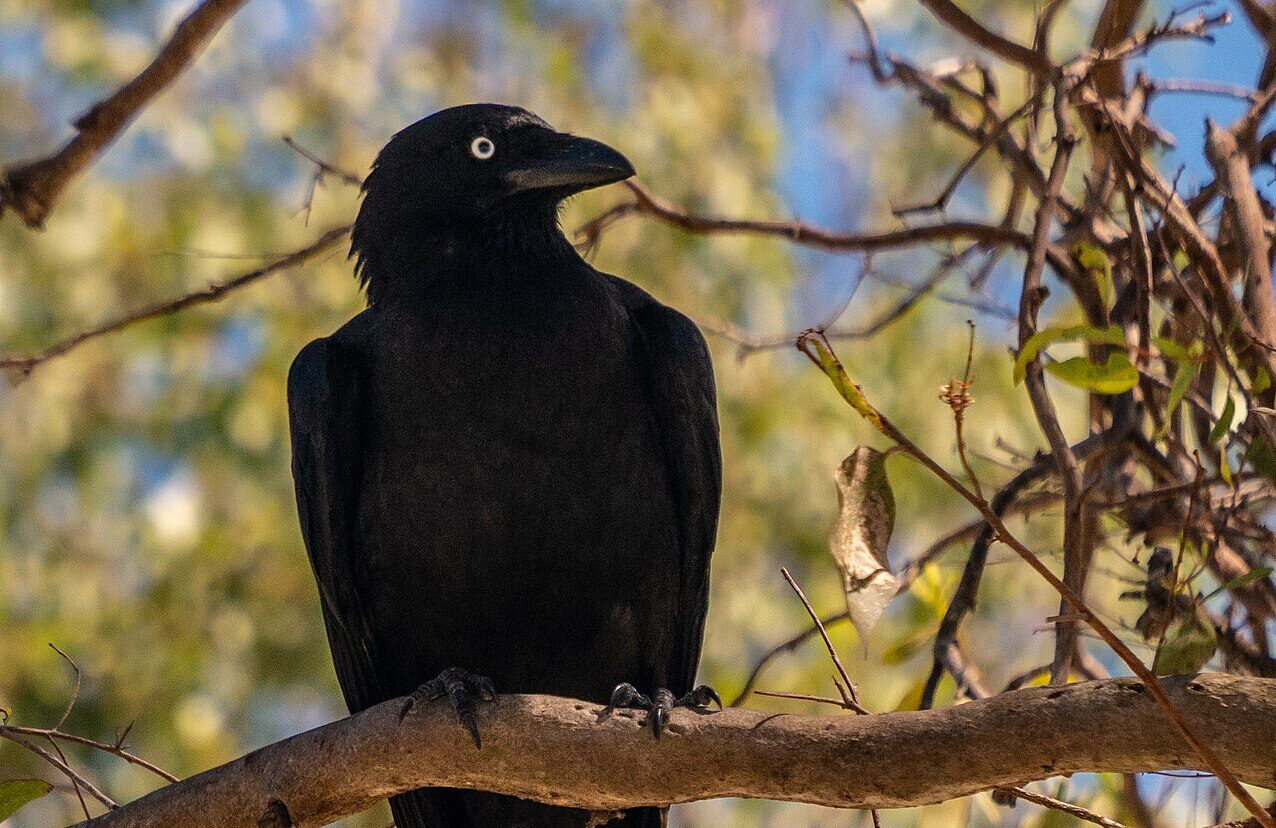
Featured image caption: A Torresian crow in Australia. John Robert McPherson (2013), CC BY-SA 4.0, via Wikimedia Commons
Source Article: Deering, S., Whiting, M.J., Doody, J.S. et al. Predatory crows use behavioural flexibility to overcome a novel, toxic prey. Behav Ecol Sociobiol 80, 74 (2026). https://doi.org/10.1007/s00265-026-03750-4
Secondary sources:
Cane toad natural history:
- National Museum of Australia: https://www.nma.gov.au/defining-moments/resources/introduction-of-cane-toads
- National Geographic: https://www.nationalgeographic.com/animals/amphibians/facts/cane-toad
- National Geographic Kids: https://kids.nationalgeographic.com/animals/amphibians/facts/cane-toad
Planigale: Webb, J.K., Brown, G.P., Child, T., Greenlees, M.J., Phillips, B.L. and Shine, R. (2008), A native dasyurid predator (common planigale, Planigale maculata) rapidly learns to avoid a toxic invader. Austral Ecology, 33: 821-829. doi:10.1111/j.1442-9993.2008.01847.x
Wildlife Wars
Australia’s weird wildlife just got wackier – and it may benefit the continent’s damaged ecosystems.
In Australia, the cane toad (Bufo marinus) has wreaked havoc on native wildlife since the 1930s. After being introduced to control agricultural pest insects, the literally toxic toad instead proliferated and poisoned, ate, or outcompeted other species across the continent. The government officially declared them a problem species in 1950, and the amphibian invasion continues to expand.
Enter the Torresian crow (Corvus orru): The crows’ range entirely overlaps with the cane toads’ in Australia. A member of the corvid family known for its intelligence, this bird was reported preying on the cane toads by removing their toxic glands.
Scientists led by the University of Canberra in Australia undertook an experimental study to test whether the stories were true.
Truly Toxic

Cane toads secrete a milky cocktail of a poison called bufotoxin from a gland behind their shoulders.
In their native range in Central and South America, the toads are preyed on by caimans (a member of the crocodile family) and some snakes, eels, and fish who have evolved immunity to their toxin or avoid the most venomous parts.
However, none of the toads native to Australia are toxic. Many frog-eating predators are struggling with this novel and noxious prey, with species like yellow spotted monitors and northern quolls facing severe population declines and local extinctions.
However, some predators including crows, kites, and certain rodents have been seen avoiding the toxic glands to successfully eat the toads.
The study team used the Torresian crow as a model species for testing animal behavioral flexibility toward the cane toad.
What’s Your Poison?
Researchers deployed over 150 remotely monitored feeding stations that tested whether wild crows reacted differently to cane toads compared to non-toxic native frogs.
They provided one of four bait options, all deceased to simulate the crows’ typical roadkill scavenging behavior:
- Native toad (non-toxic)
- Cane toad with toxic intact
- Cane toad with toxic glands removed
- Cane toad with toxic glands out but toxin reapplied on the skin
The cane toads used were juvenile to more closely resemble the smaller native toads.
In short, the study’s results showed the Torresian crows are brilliantly birdbrained.
They ate all of the native non-toxic toads as well as all of the cane toads with the toxic glands removed in observable trials. When crows encountered cane toads with intact toxic glands, they all avoided the toxic parts (specifically the dorsal skin, head, and parotoid glands) and ate the nontoxic portions of the toad’s body.
When cane toads had their glands removed but a toxin was reapplied to their skin, 58% of crows consumed toxic regions.

Hope for Fewer Hops
Torresian crows have behaviorally adapted to prey on a toxic and novel invasive species, cementing corvids’ reputations as flexible and intelligent predators.
Crows also appeared to use multiple cues, including visual and chemical signals, to detect toxicity.
Notably, other species in Australia have learned to avoid cane toads and their tadpoles, including native species of fish and toads. And the common planigale – a small carnivorous marsupial – will avoid the toads or eat them snout-first to avoid the toxic glands after just one exposure using chemical cues.

Predators distinguishing between native frogs and cane toads shows these behaviors are not instinctual for all amphibian prey but learned approaches to safely consume cane toads.
Researchers and conservationists hope that these promising signs of predation pressure can mitigate the amphibians’ widespread ecosystem damage, benefitting Australian wildlife and landscapes.
Reviewed by:


