
Large Mammals Rebound as Rural Human Populations Decline
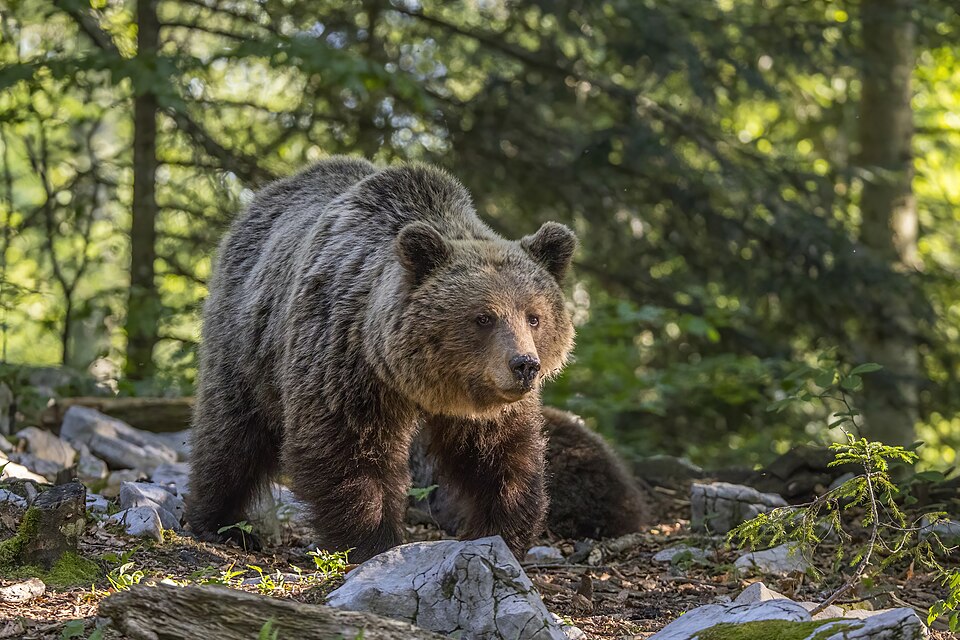
Featured Image Caption: A female Eurasian brown bear in Slovenia. Charles J. Sharp, CC BY-SA 4.0, via Wikimedia Commons
Source Article: Jensen, A. J., Goldstein, B. R.,Fukasawa, K., Iannarilli, F., & Kays, R. (2026). Large mammal recovery in the wake of human population decline. Journal of Applied Ecology, 63, e70368. https://doi.org/10.1111/1365-2664.70368
In many parts of the world, increasing global populations are driving wildlife declines from habitat loss and overexploitation. Yet in Europe and Japan, where human populations have declined in rural areas for decades, large mammals are making a comeback.

Goldilocks’s Bears: Large Mammals Recover Best
Large herbivores and carnivores, along with large birds such as waterbirds and raptors, are recovering in many rural depopulation cases. However, not every species is equally suited to thrive in such contexts. For example, frog, butterfly, and plant diversity in Japan was linked to human population stability, not to human population declines.
This study focused on large mammal herbivores, such as deer and wild boar, and carnivores, such as bears, wolves, and lynx. The authors speculated that large mammals may rebound more quickly in the face of rural population loss and associated abandoning of agricultural production because of their ability to disperse long distances.
Gains and Losses for Communities
As large mammals come back from the brink, rural communities may see positive impacts.

For example, the return of carnivores to such systems has reduced deer-vehicle collisions and increased natural scavenging processes. By preventing overgrazing, predators also enable millions of tons of carbon to be sequestered.
Meanwhile, large herbivores trampling or foraging on plants can facilitate habitat for other species.
Economically, countries can capitalize on species returning through wildlife watching programs: Already, bear watching in Europe and sika deer tourism in Japan are million-dollar operations.
At the same time, increased wildlife presence can result in more conflicts, such as costly herbivore crop damage, higher rates of vehicle collisions with restored prey species, and carnivores preying on livestock. In Japan, Asiatic black bear attacks on humans have also jumped up in recent years.
Even the mere presence of large carnivores can intimidate residents, resulting in decreased social tolerance and reduced support for conservation.
A Complex Web: Factors Driving Carnivore Recovery
Beyond Japan and Europe, other countries in Asia and the Americas are also experiencing rural depopulation, which has coincided with large mammal recovery. However, the next locations for such recoveries are harder to predict.
While human depopulation and agricultural abandonment seemingly act on wildlife presence, other factors could shape mammal recovery in rural areas. Changes in climate, agricultural economic shifts, decreased hunting pressures, and the use of active management strategies such as species reintroductions have all played roles.

Additionally, political and social tolerance can dramatically impact wildlife conservation outcomes and may not reflect a given country’s actual carrying capacity for a species.
Researchers noted that immigration policy will also affect both where people are moving and what attitudes and familiarity with local wildlife they bring with them.
Global Contexts, Local Drivers: Building Human-Wildlife Coexistence
Researchers and managers need to investigate why recoveries are taking place and learn about the human side of large mammal management in their systems to best leverage benefits and increase tolerance, the authors wrote.
Conservationists and managers should coordinate to gather robust long-term data on mammal abundance and distribution, as well as the social and ecological impacts from changes to their populations.
Understanding the drivers and effects of large mammal recovery can inform adaptive management strategies, such as consolidating agricultural land, creating livestock compensation and protection programs, educating residents, and using nonlethal tools to mitigate conflict such as fencing and livestock guardian animals.
Researchers suggested that incentivizing hunting programs could maintain sustainable wildlife populations and provide other community benefits such as outside income or food provisioning.
Rural areas typically have less economic and infrastructural capacity to deal with increased human-wildlife conflict, requiring more-resourced communities and countries to assist in achieving coexistence.
Finally, the authors also recommended building human-wildlife coexistence by sharing the community and environmental benefits from large mammal recovery.
In short, as wildlife adapt to changing circumstances, there are pathways for us to adapt to them. By treating increasing wildlife populations as a change to be sustained, managed, or even celebrated rather than eradicated, and by assisting rural populations with strategies and tools to coexist, both wildlife and humans can thrive.
Reviewed by:

