
Gender Matters for Impacts of Human-Wildlife Conflict
Source article: Adler, K. A., Gore, M. L., & Wilkinson, C. E. (2025). The gendered costs of human-wildlife conflict: A global systematic review. Ambio. https://doi.org/10.1007/s13280-025-02300-y
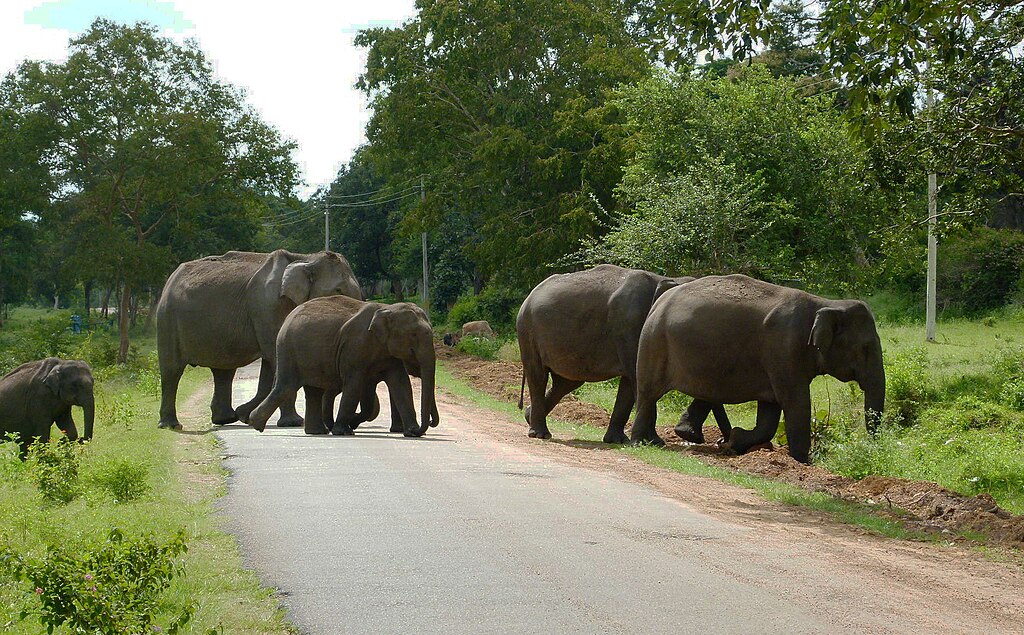
Featured image caption: Wild Asian elephants cross a road in Bandipur National Park. The species is endangered, but conflicts persist over human habitat destruction and elephant crop raiding. Photo by L. Shyamal, CC BY-SA 3.0 https://creativecommons.org/licenses/by-sa/3.0, via Wikimedia Commons
Why Gender Matters for Wildlife
Land use and climate changes can push humans and wildlife into conflict over resources, affecting human livelihoods and safety, wildlife populations, and animal welfare. Marginalized groups often experience disproportionate consequences from human-wildlife conflict, yet few studies have assessed how people of different genders may face unique costs and perceive wildlife differently.
Since gender roles can determine people’s daily activities and societal expectations, people of different genders will experience different vulnerabilities and indirect costs from conflicts with wildlife, argued researchers led by the University of California, Los Angeles.
In addition, social norms and leadership structures may exclude women and other marginalized genders from access to conflict resolution resources or from making conservation decisions, despite evidence that including diverse genders in conservation leadership creates more positive outcomes for people and wildlife.
Researchers reviewed case studies worldwide to evaluate gendered experiences of human-wildlife conflict and suggest next steps for equitably resolving conflict issues.
Costs of Conflict
Researchers reviewed 121 publications covering diverse geographies, cultural contexts, and wildlife species.
They examined six types of “costs,” or negative outcomes caused by interacting with wildlife: Physical (tangible harm or violence), economic, psychological (mental health), social costs and perceptions of wildlife, wildlife crime costs, and conservation management costs related to gendered exclusion from conservation activities related to human-wildlife conflict.
While examined separately, research showed these costs are interconnected.
Physical costs were most represented in the literature with 75 papers and revealed significantly divergent effects of human-wildlife conflict on men and women.
Women were more likely to experience physical violence inflicted by other people, as well as health consequences from decreased personal care and stress, as many were responsible for providing for their families despite conflict-related losses or fears.
Researchers warned these costs often go unnoticed, as women may be reluctant to share them when men are present. For example, in India, women who feared tigers in the forest gathered lower-quality cattle feed elsewhere – yet they were then beaten by their husbands when cows produced less milk and the women could not pay their dowries.
Meanwhile, men more often experienced injuries and exposure to zoonotic (wildlife-originating) diseases, as in many cultures they are in close contact with wildlife through hunting, protecting crops, and preparing wild meat.

Economic costs (described in 68 papers) were almost entirely experienced by women, where wildlife preying on livestock or destroying crops resulted in lost food, income sources, and property.
Especially for rural subsistence communities, wildlife damage can inflict serious harm. Additionally, indirect costs – such as reduced economic productivity or healthcare costs to treat injuries – remain understudied.
Women in some areas also faced unique barriers, including higher illiteracy rates, when applying for compensation for losses.
Researchers noted that while roles in wildlife crime may differ, motivations and outcomes are likely similar across genders, indicating a severe and growing issue that can cause further human-wildlife conflict.
Cultural Costs, Severe Consequences
Economic and physical impacts also strain mental health, creating psychological costs related to fears and added stress from wildlife conflict.
While researchers did not find that experiencing psychological costs varied significantly between men and women, mental health is likely affected in different situations. For example, women may fear predators harming their children, being attacked while collecting firewood, or being punished for failing to meet responsibilities.
Researchers found social costs and negative attitudes toward wildlife were linked to psychological and physical human-wildlife conflict costs.
For women, being confined to households resulted in more negative attitudes toward wildlife compared to men who had more knowledge and exposure; women who served as household protectors also feared and disliked species like jaguars, sloth bears, and bats that could threaten their family’s safety.

Wang et al., CC BY 4.0 <https://creativecommons.org/licenses/by/4.0>, via Wikimedia Commons
Men and women can also face unique social costs from failing to meet cultural norms and expectations due to wildlife conflicts, from men facing stigma over hunting rodents to ‘tiger widows’ losing community after their husbands are killed. These losses can compound as psychological harms.
Finally, conservation management costs (on the exclusion or inclusion of women in management activities) were described in just four papers. While least represented, this area is critical to study.
When certain groups control access to tools, decision-making, or compensation for addressing wildlife conflicts, excluded members struggle to respond to conflict issues and may oppose conservation initiatives. Additionally, women can be disproportionately affected by conflicts and bring unique experiences to conservation decision-making.
Building Equitable Conservation Outcomes
Researchers found many wildlife conflict costs varied by gender, but not across continents.
Gendered costs impact human wellbeing and perceptions of wildlife and can even intensify conflicts. When negative wildlife encounters occur, people become less tolerant of certain species, causing a cycle of retaliation. However, research showed people’s attitudes toward wildlife can improve with successful conservation efforts like ecotourism.
Gender and human-wildlife conflict remains an underresearched topic, and most reviewed papers did not explore gender as a primary research question. However, consulting communities about how gender and human-wildlife conflict intersect in their local contexts could improve conservation efforts.
In particular, uplifting diverse voices – such as the concerns of women and of gender-nonconforming individuals, who were not represented in this review – can reduce conflict severity and ensure communities benefit from wildlife interactions. Understanding and implementing equitable conflict solutions helps both humans and wildlife.
Reviewed by:


