
Step by Massive Step: How Dinosaur Megafauna Shaped the Earth
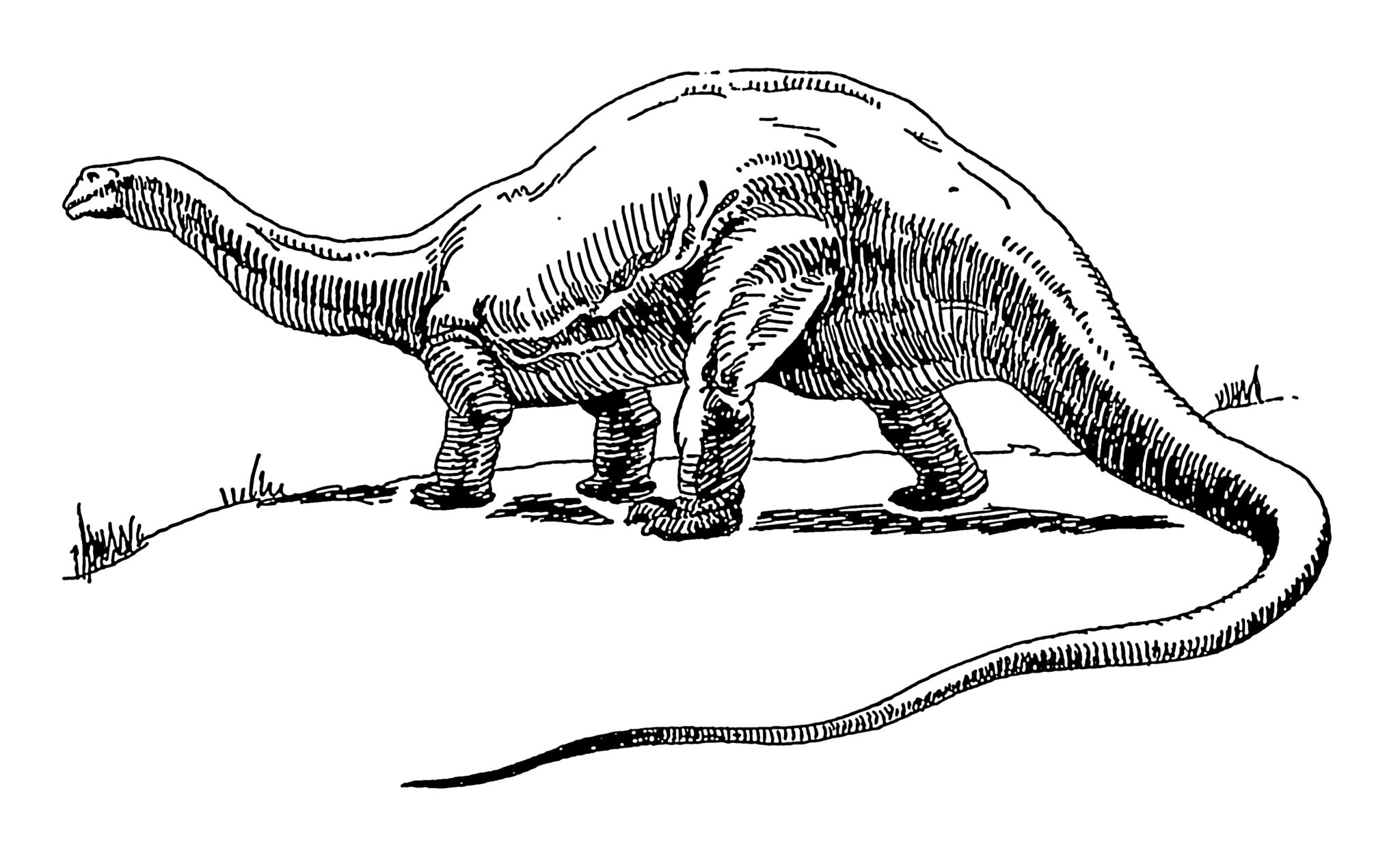
Featured Image Caption: Sauropods were among the massive reptiles that once roamed the Earth. How did their disappearance impact the planet? Image Source: “Dinosaur – brontosaurus“, Pearson Scott Foresman via Wikimedia Commons, Public Domain.
Source Article: Weaver, L. N., Tobin, T. S., Sprain, C. J., Wilson Deibel, P. K., Korasidis, V. A., Carvalho, M. R., Kaskes, P., & Fendley, I. M. (2025). Dinosaur extinction can explain continental facies shifts at the Cretaceous-Paleogene boundary. Communications Earth & Environment, 6(1), 712. https://doi.org/10.1038/s43247-025-02673-8.
Supplementary Sources:
- Malhi, Y., Doughty, C. E., Galetti, M., Smith, F. A., Svenning, J.-C., & Terborgh, J. W. (2016). Megafauna and ecosystem function from the Pleistocene to the Anthropocene. Proceedings of the National Academy of Sciences, 113(4), 838–846. https://doi.org/10.1073/pnas.1502540113
Critter Career Day: All About Ecosystem Engineers
What do you picture when you think of an engineer? Do people donning hard hats and neon orange vests come to mind? Or is it an overworked student crammed behind multiple computer screens, processing line after line of code?
What about dinosaurs?
It may sound strange, but dinosaurs and other large animals (like elephants, giraffes, rhinoceroses, bison) known as “megafauna” are undoubtedly engineers in their own right. Although they don’t know the laws of thermodynamics and can’t do calculus, megafauna belong to a special category of engineers known as ecosystem engineers. These are animals that modify and shape the environments that they live in, creating unique habitats that would not exist in their absence.
Consider animals like beavers, who build dams and change the flow of rivers, or corals, whose bodies create complex structures for other marine life to live in. Herbivorous terrestrial megafauna specifically shape their environments with their size. These massive, plant-eating creatures can promote open or patchy habitats when moving in herds, as they consume, trample, and uproot plants when moving across the land. They also play a role in seed dispersal and plant growth rates, dictate the types of plants that grow in an area by destroying browsing-intolerant species, prevent the success of smaller herbivores through competition, and even increase nutrient availability by consuming, digesting, and then excreting plant matter that would have otherwise been locked away1.
These factors make it abundantly clear that herbivorous terrestrial megafauna play a key role in their ecosystems. But what happens when an event, such as an extreme extinction, suddenly removes these animals from their habitats?
Post-Extinction Enigma: What Caused the Earth to Change in the Paleogene?
Perhaps the most famous mass-extinction event was the end-Cretaceous mass extinction (EKME), killing the non-avian dinosaurs approximately 66 million years ago. When the kilometers-wide asteroid struck the Earth, it set in motion a series of geographical and climatic changes that ultimately led to the disappearance of much of the Earth’s biodiversity, with a disproportionate effect on the large non-avian dinosaurs.

The Chicxulub impactor hit the Earth in what is now the Yucatán Peninsula. This event spurred forth a series of tsunamis, earthquakes, wildfires, and atmospheric changes that wiped out much of Earth’s animal life. Image Source: “Comet Crash“. Ben Crowder via Wikimedia Commons, CC BY-SA 2.0.
However, it wasn’t only the wildlife that markedly changed following the asteroid’s impact. As the planet recovered from this cataclysm, the surface of the Earth itself looked different. Geological records indicate that fluvial environments – environments defined by rivers flowing through them – underwent a massive shift after the EKME. Before the impact, these ecosystems were characterized by narrow rivers with many smaller branching streams. Distal rivers contained an abundance of rock fragments deposited from the main river and were sparse in organic matter. After the EKME, these rivers were significantly wider and winding, with few small branching streams and a noticeable increase in organic matter deposits.
It has been a long-standing assumption that this change in fluvial geography was independent of the EKME. The shift in the landscape was seen as a natural progression brought about by changes in climate and shifting seas, with no relation to the loss of the non-avian dinosaurs. However, recent research from Dr. Lucas Weaver and his collaborators sought to challenge this hypothesis with one of their own: the “Dinosaurs as Ecosystem Engineers” hypothesis. They believe dinosaur megafauna were largely responsible for shaping the landscape before their extinction, promoting large, open floodplains and preventing the development of extensive forested areas. After the EKME, the landscape lacked the influence of these massive animals, promoting a gradual shift in the environment.
Rock and Metal: Music to Paleobiologists’ Ears
To test this hypothesis, the researchers selected exposed outcrops of rock in the Western Interior of North America that may have been present during the asteroid’s impact. These areas were identifiable by a very obvious visual change in the rock layers called a “facies shift”, as well as unusually high levels of iridium – an element that was deposited when the asteroid struck the Earth. Since these facies shifts consistently correlated with high iridium anomalies regardless of location, the researchers proposed that such a universal change supports the idea that dinosaur megafauna were responsible for maintaining ancient floodplains. If they were not a factor in shaping their environments, then the geographies of these different regions would be location-specific, instead of showing a consistent shift throughout.

Layers of rock, called strata, help scientists understand what ancient landscapes looked like. Each layer represents a different period of time; the further down you go, the older the rock becomes. Image Source: “Rock strata, Sandsend“, Pauline E via Wikimedia Commons, CC BY-SA 2.0.
The widespread facies shifts, coupled with the type of environmental variations interpreted from these shifts, are evidence for the “Dinosaurs as Ecosystems Engineers” hypothesis, as changes in the landscape are reflective of a loss of giant, roving herbivores. Areas that were once open and defined by narrow, straight rivers, with extensive floodplains before the EKME became more forested with wider winding rivers and fewer river branches. Abiotic factors alone are not enough to explain these facies shifts. Previous research suggested that a rising water table led to more ponds post-EKME; however, Dr. Weaver’s paper found that the water table largely remained at the same level over time and that what were once identified as ponds were actually widened rivers. Another old theory posited that the expansion of seas into previously terrestrial ecosystems caused the change in sediments. Although this sea did begin to expand onto the land near the end of the Cretaceous, this process started well before the EKME, so this theory does not align with the timeline revealed by the rock.
Time and Time Again: How the Earth May Change With Megafauna on the Decline
This idea that large herding dinosaurs like triceratops and hadrosaurs actively shaped their environments has somewhat concerning implications for modern landscapes. As the Earth’s populations of extant herbivorous megafauna continue to decline, we may see gradual shifts in both abiotic and biotic aspects of ecosystems. The disappearance of megafauna coupled with a changing climate may lead to widespread geographical changes, such as changes in flooding rates, soil characteristics, and nutrient availability, which in turn, may negatively affect plants and animals subjected to these changes, especially those which are highly specialised.
This work underscores the importance of protecting Earth’s biodiversity, especially ecosystem engineers, as failure to do so may result in further loss of plant and animal life. We, as humans, must be careful with how we interact with other species on Earth, as the loss of a single species could cause an entire ecosystem to crumble. Continued efforts to protect these large, herbivorous animals will be key to the continued health of our planet and those that share the land.

Reviewed by: Cassie Welander

.png)

