
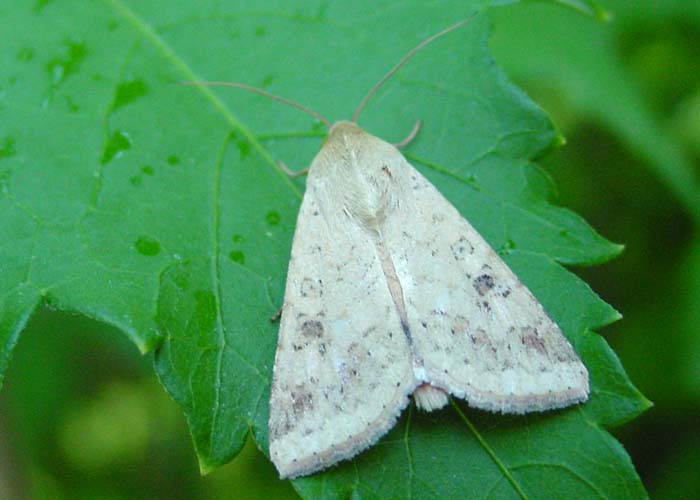
Climate change confuses moths when egg-laying
Source article: Chen Q., Chang H., Ma B., Guo M., Cao S., Li B., Wang X., Berg B., Chu X., Zhang T., Hansson B., Liu Y., Wang G., 2025, Carbon dioxide drives oviposition in Helicoverpa armigera, National Science Review doi.org/10.1093/nsr/nwaf270
Supplementary Sources:
Jiang, NJ., Dong, X., Veit, D. et al. Elevated ozone disrupts mating boundaries in drosophilid flies 2024, Nat Commun 15, 2872 doi.org/10.1038/s41467-024-47117-7
Keesey, I. W., Doll, G., Das Chakraborty, S., Baschwitz, A., Lemoine, M., Kaltenpoth, K., Svatoš, A., Sachse, S., Knaden, M., Hansson, B. S. Neuroecology of alcohol risk and reward: methanol boosts pheromones and courtship success in Drosophila melanogaster, 2025, Science Advances, doi: 10.1126/sciadv.adi9683 (2025)
Climate change and rising levels of carbon dioxide (CO2) can have significant negative ecological effects, but little is still known about how it affects insects. Although insects may seem insignificant, many are key players in the ecosystem, acting as pollinators or recycling nutrients.
The language of smell
The sense of smell in insects is extremely important. While us humans mainly use sight and sound for communication, most insects primarily use their sense of smell to find food, mates, communicate danger and even find places to lay eggs (oviposition). This communication happens via different chemicals, each of which can represent a different message. Furthermore, mixtures of these chemicals convey complex messages, like an insect’s very own language.
Of moths and men

The cotton bollworm, Helicoverpa armigera, is a major agricultural crop pest. Due to the drive to develop pest control strategies for this type of insect, a lot is understood about how they communicate and sense of smell, or olfactory system. This makes them a perfect candidate for studying how human-caused climate change, specifically elevated CO2 levels, can impact communication in insects.
Usually, the cotton bollworm finds a site to lay eggs by “smelling” how much CO2 a leaf emits. Younger leaves are generally better, as they provide more food for growing larvae, and these leaves tend to emit a higher level of CO2 than older leaves. In a new study from the Chinese Academy of Agricultural Sciences, researchers wanted to investigate how differing levels of CO2 might affect the moth’s behaviour when it comes to oviposition.
Choosing CO2
In the study, the scientists began by testing CO2 emissions from different leaves, confirming younger leaves emit higher CO2. They then tested the moth’s attraction to different levels of CO2 by observing their behaviour. The moths were given two choices in each test – CO2-free air (0 ppm) and air with a controlled level of CO2 (400 ppm, 1000 ppm or 10000 ppm). Females which had been mated with (as opposed to virgin females and males) had a preference for two levels of CO2 (400 ppm and 1000 ppm) when compared to the 0 ppm air. Additionally, at the high levels of 10000 ppm, the moths no longer showed any preference. This indicates that the moth’s behaviour is influenced by not just the presence of, but the concentration of CO2.
The researchers also confirmed that moths that lay their eggs on young leaves were the most successful. This means that not only did they lay more eggs on young leaves, but that these eggs were more likely to survive and become larger caterpillars.
Altered senses
To better understand the role of environmental CO2, after observing normal egg-laying behaviour at 400 ppm CO2 (close to today’s levels), the researchers then observed the moths at 1000 ppm CO2 (the predicted CO2 level in 2100). At the higher level of carbon dioxide, the moths lay less eggs and were less successful overall.
Finally, the scientists decided to investigate the mechanism of action of CO2 detection by the moths. They discovered three receptors involved in CO2 detection and identified the area of the moth’s brain activated by these receptors, which acts like a CO2-compass to guide the moths to their oviposition sites. Understanding this mechanism opens up the possibility to utilise it in pest control strategy in future, by interfering with a pest insect’s ability to find a suitable egg-laying spot.
Ecological impacts
Overall, carbon dioxide sensing is critical for some moths’ egg-laying behaviour. This may have an impact on other insects that utilise CO2 too, such as mosquitoes that use CO2 in finding human hosts to bite. While the ecological impacts may seem small, it is impossible to estimate how severe long term consequences might be. Change in insect behaviour can have a larger effect on an ecosystem, especially considering the significant role insects play in the food chains.
Carbon dioxide isn’t the only chemical that changes in the atmosphere due to climate change or human-induced changes, like air pollution. Other insects have displayed altered behaviour under changed atmospheric conditions. For example, some flies have been seen to mate with the wrong species or wrong sex when exposed to increased levels of ozone (Jiang et al, 2024). Other chemicals, such as increased methanol levels, have also been shown to affect insect mating behaviour and boost mating success in some flies (Keesey et al, 2025).
In summary, changes to insect behaviour under different environmental conditions shows how sensitive their chemical communication is, and further emphasize the importance of monitoring, understanding, and combating human-induced climate change and pollution. This study, among others, raises concerns for how our ecosystems will look in 100 years, and whether insects will be able to play the same important role they do today.
Reviewed by:


